
Blackjack Classic Review 2026
Overview
Blackjack Classic is a card table game available across all major platforms with an RTP of 99.29% using basic strategy, giving it one of the lowest house edges of any casino game.
Blackjack Classic is the best-value card game in most online casino lobbies. With basic strategy applied, the house edge drops to 0.71%, which is outstanding. Learn the strategy chart, skip insurance and side bets, and play for real money only at tables paying 3:2 on blackjack.
How It Plays
RTP, Volatility & Fairness
Full Review
Blackjack Classic is the game I point to when anyone asks which online casino table game gives them the best shot at their money. It’s a card game available across every major platform, from Playtech and NetEnt to Evolution and Microgaming, and when you play it with basic strategy, the RTP is 99.29%. That means a house edge of 0.71%. Among games with a fixed mathematical structure, that’s about as low as it gets.
The 99.29% figure comes with an important qualifier: basic strategy. Without it, the house edge climbs to around 2%, sometimes higher, depending on your decisions at the table. Basic strategy is a mathematically solved decision chart that tells you exactly what to do with every hand against every dealer upcard. It’s not a secret or a shortcut. It’s the correct mathematical move for each situation, and it’s freely available. Using it is the difference between playing at 0.71% house edge and giving the casino 2% or more.
The standard game uses 6 to 8 decks shuffled by the RNG at the start of every hand. Blackjack pays 3:2. The dealer stands on soft 17. These three rules are the foundation of the RTP figure. If you see a table offering 6:5 on blackjack instead of 3:2, the house edge increases by roughly 1.4 percentage points. That single rule change costs you more than the entire house edge of the standard game. Avoid 6:5 tables.
How Blackjack Plays
The goal in blackjack is to build a hand worth more points than the dealer’s without exceeding 21. Cards 2 through 10 are worth their face value. Jacks, queens, and kings are each worth 10. Aces are worth 11 or 1, whichever is more useful for the hand. A hand containing an ace counted as 11 is called a “soft” hand (e.g., Ace-6 = soft 17). A hand where the ace must be counted as 1 to avoid busting is called a “hard” hand.
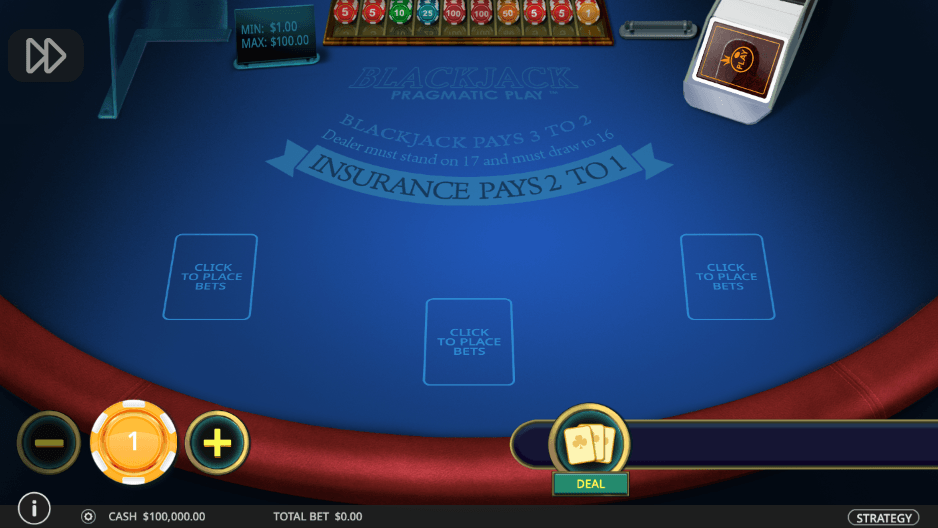
At the start of each round, you place a bet. You and the dealer are each dealt two cards. Your two cards are face-up. The dealer has one card face-up (the upcard) and one face-down (the hole card). If your first two cards total 21 (an ace plus any 10-value card), that’s a blackjack and pays 3:2 immediately, unless the dealer also has blackjack, in which case the hand pushes (you get your bet back).
If neither side has a natural blackjack, you choose how to play your hand. Hit takes another card. Stand keeps your hand as-is. Double Down doubles your bet and deals you exactly one more card, then stands. Split is available when your first two cards are a pair, separating them into two independent hands (each requires an additional equal bet). Surrender, where available, lets you forfeit half your bet to end the hand immediately rather than play it out. Not all platforms offer surrender. Insurance is a side bet available when the dealer shows an ace; it pays 2:1 if the dealer has blackjack. I’ll explain later why you should decline it every time.
Once you’ve acted on your hand, the dealer reveals the hole card. The dealer must draw cards until reaching 17 or higher, then stands. In this version, the dealer stands on all 17s, including soft 17 (Ace-6). If the dealer busts (exceeds 21) and you haven’t, you win. If both hands are valid, the higher total wins. A tie (push) returns your bet. The round ends, bets are settled, and the RNG shuffles for the next hand.
Bets, Payouts & Side Bets
The main game pays clearly. A winning hand pays 1:1. A winning blackjack (natural) pays 3:2 on a standard table. A push returns your bet. That 3:2 payout is important because it’s the single most player-favorable rule in the game’s structure. The Wizard of Odds confirms that switching from 3:2 to 6:5 blackjack payout adds 1.39% to the house edge on its own.
Insurance is offered when the dealer shows an ace, before the hole card is revealed. It’s a separate bet, up to half your original stake, that pays 2:1 if the dealer has blackjack. The math on insurance is straightforward and unfavorable. For the insurance bet to break even, the dealer’s hole card would need to be a 10-value card more than one-third of the time. In a 6-deck game, there are 96 ten-value cards out of 312 total. The probability is about 30.77%, not the 33.33% needed to break even. The house edge on insurance is approximately 7.4%. Decline it, always, regardless of what cards you’re holding.
Side bets are separate wagers placed at the start of the round alongside the main bet. Perfect Pairs pays on your first two cards forming a pair: a mixed pair (different suits, same value) pays around 6:1, a colored pair (same color, different suit) pays around 12:1, and a perfect pair (identical cards) pays up to 25:1 depending on the table. The house edge on Perfect Pairs is typically 5–8%. The 21+3 side bet combines your two hole cards with the dealer’s upcard to form a poker hand. Payouts range from 9:1 for a flush up to 100:1 for a suited three-of-a-kind. House edge is around 3–7% depending on the variant. Both side bets are entertainment products, not value bets. Including them in your session significantly reduces your overall RTP from the 99.29% baseline.
Splitting and doubling are where basic strategy earns its keep. Splitting aces and eights is generally correct in almost all situations. Never splitting tens is equally standard. Doubling on 11 against a dealer 2 through 10 is the classic double opportunity. These rules aren’t instinct for most players, which is exactly why the house edge is 2%+ for players not using the chart.
Strategy & House Edge
Basic strategy is the complete optimal play for every blackjack situation, derived mathematically for a given set of rules. For a standard 6-deck game where the dealer stands on soft 17, the strategy is a grid: your hand total down one axis, the dealer’s upcard across the other. Each cell tells you whether to Hit, Stand, Double, or Split. The grid is available freely online. I’ve used one openly while playing RNG blackjack. There’s no rule against it, and it’s the correct approach.
The most common deviation from basic strategy that costs players money: hitting a soft 18 against a dealer’s 9, 10, or ace (basic strategy says hit); standing on 16 against a dealer’s 7 through ace (basic strategy says hit despite the risk); and taking insurance whenever the dealer shows an ace (always wrong). These three mistakes alone add roughly 0.5% to the house edge, and many casual players make all three.
Card counting is not applicable in digital Blackjack Classic. The RNG shuffles the deck after every hand, meaning the card composition resets completely before each round. Counting works in a physical game where cards are dealt from a shoe without re-shuffling until the cut card is reached. In RNG blackjack, there is no “count” because there’s no running deck composition to track. This makes the game simpler to play correctly: basic strategy is all you need, and it’s optimal.
Where to Play Blackjack Classic
Blackjack Classic is available at every major online casino. Both Playtech and NetEnt publish versions carrying the 99.29% RTP on the standard rule set, and the game is among the first table games you’ll find in any casino lobby. Free-play and demo mode is available at most casinos without creating an account, which is genuinely useful for drilling basic strategy decisions at zero cost before committing real money.
Live blackjack is a separate product, available from Evolution and Playtech with real dealers and physical cards. The rule sets vary more in live play, including H17 (dealer hits soft 17) versions that slightly increase the house edge, and some tables paying 6:5 on blackjack. Always check the paytable in live blackjack before sitting down. For RNG Blackjack Classic specifically, both versions work well on mobile; the touchscreen interface handles hit, stand, double, and split actions cleanly without requiring a mouse.