




















PayPal is a digital wallet that connects to a bank account, debit card, or credit card, letting people send and receive money without handing over financial details to whoever they’re paying. It’s used by hundreds of millions of account holders around the world for everything from online shopping to person-to-person transfers, and its reputation for buyer protection and account security follows it wherever it’s accepted.
At online casinos, PayPal’s footprint is narrower than at most retailers. Only a select number of operators integrate it directly into their cashier, so it’s worth checking whether a specific casino supports it before counting on it as a deposit option. This guide covers how PayPal works at the casinos that do offer it, what deposits and withdrawals typically look like, and a few alternatives worth knowing if PayPal isn’t available where you want to play.
Our Top PayPal Casino Pick at a Glance
Rather than a long list, here’s a closer look at the casino on our recommended roster that stands out for PayPal support.
1. 7Bit Casino – Deep game library with a broad payment mix (4.5/5)
7Bit Casino has been running since 2014 under a Curaçao Gaming Authority license (OGL/2024/1307/0748), and its cashier lists PayPal alongside cards, several e-wallets, and a long roster of cryptocurrencies. That range gives players room to pick whatever payment method suits them best, rather than being boxed into one option.
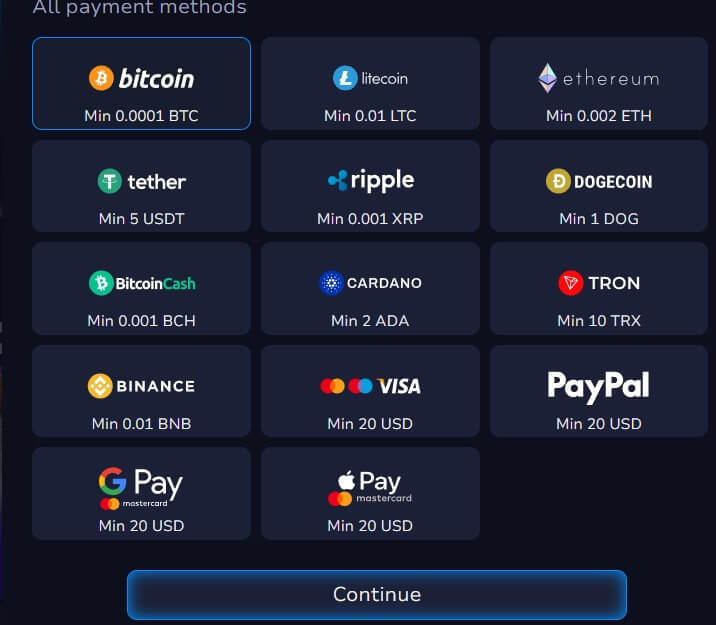
Beyond payments, 7Bit backs that flexibility with a catalog of more than 2,500 games spanning slots, live dealer tables, and crash titles, plus a four-deposit welcome package for new players. The full 7Bit Casino review breaks down the bonus terms, game library, and support experience in more detail.
What Is PayPal
PayPal launched in 1998 and has grown into one of the most recognized online payment brands anywhere, built around moving money without exposing the sender’s card or bank details to whoever’s on the other end. Signing up takes an email address and a linked funding source, typically a bank account or card, and from there it acts as a middleman for practically any online transaction.
That same middleman role carries over to online casinos. Instead of entering card details directly into a casino’s cashier, a player logs into PayPal and approves the transaction from there, so the casino only ever sees a PayPal account, not the bank or card behind it. For a broader look at how PayPal stacks up against cards, crypto, and other options, see our full casino payment methods guide.
Depositing with PayPal
Where a casino supports it, funding an account with PayPal follows a familiar pattern: open the cashier, select PayPal from the list of payment options, enter the deposit amount, and confirm through PayPal’s own login screen rather than a card form. Because the casino never handles bank or card numbers directly, there’s one less step where sensitive details could go wrong.
Deposits through PayPal are typically credited close to instantly once the transaction is approved on PayPal’s side, similar to how most e-wallets behave. Some casinos set a minimum deposit amount specific to PayPal, so it’s worth checking the cashier’s limits before assuming a card-sized minimum carries over.
Withdrawals with PayPal
Getting money back out through PayPal generally means selecting it as the payout method in the same cashier menu used for deposits. Most casinos that support PayPal withdrawals require the payout to go back to the same PayPal account used to deposit, a standard anti-fraud rule rather than something unique to any one operator.
Processing time varies by casino rather than by PayPal itself. Once a withdrawal clears a casino’s own verification and processing queue, PayPal transfers tend to land quickly, often on a similar timeline to other e-wallets, though the casino’s internal review step is usually the bigger factor in how long the whole process takes.
Fees & Limits
PayPal itself typically doesn’t charge personal users a fee to send money domestically, though this can vary by region, currency, and funding source, so it’s worth checking PayPal’s own fee schedule for anything unusual. Any additional fee on a casino deposit or withdrawal usually comes from the casino’s side, not PayPal’s.
Deposit and withdrawal limits are set by each casino individually rather than by PayPal, so minimums and maximums can differ quite a bit from one operator to the next. Checking the specific limits listed in a casino’s cashier before depositing avoids any surprises partway through a transaction.
Is PayPal Safe for Online Casino Deposits
PayPal’s core appeal for online gambling is the same as it is everywhere else: the casino only ever sees a PayPal account, never the bank details or card number behind it. That separation adds a layer of protection if a casino’s own systems were ever compromised, since there’s nothing sensitive on the casino’s side to expose.
PayPal also backs eligible transactions with its own buyer protection and dispute resolution process, giving players somewhere to go if a payment doesn’t behave as expected. That said, PayPal’s own security doesn’t say anything about whether a given casino is trustworthy. Checking a casino’s license and reputation matters just as much as the payment method attached to it.
Alternatives to PayPal
PayPal isn’t the only way to keep a casino cashier at arm’s length from a bank account. Skrill casinos and Neteller casinos both work on the same e-wallet principle, connecting to a bank account or card without exposing it directly to the casino, and both show up at a wider range of operators than PayPal currently does. For players comfortable with digital assets, Bitcoin casinos tend to offer the fastest withdrawals of any payment option, often clearing in under an hour.
Which one makes sense comes down to what’s already supported at a given casino and how quickly a player wants access to winnings. Checking the cashier page before signing up is the simplest way to confirm which of these options a specific casino actually offers.