
Every casino bonus comes wrapped in a set of rules buried in the terms and conditions, and those rules decide whether the offer is actually worth claiming. A wagering requirement tells you how much you need to bet before bonus winnings become withdrawable, and game weighting decides which of those bets actually count. Add in cashout caps, exclusion lists, and a ticking clock, and a “$500 free” headline can turn into something worth a lot less once you read the fine print.
This guide walks through the clauses that show up in almost every bonus offer, in plain English, so you can size up a promotion in under a minute instead of hunting through a wall of legal text.
Wagering Requirements Come First
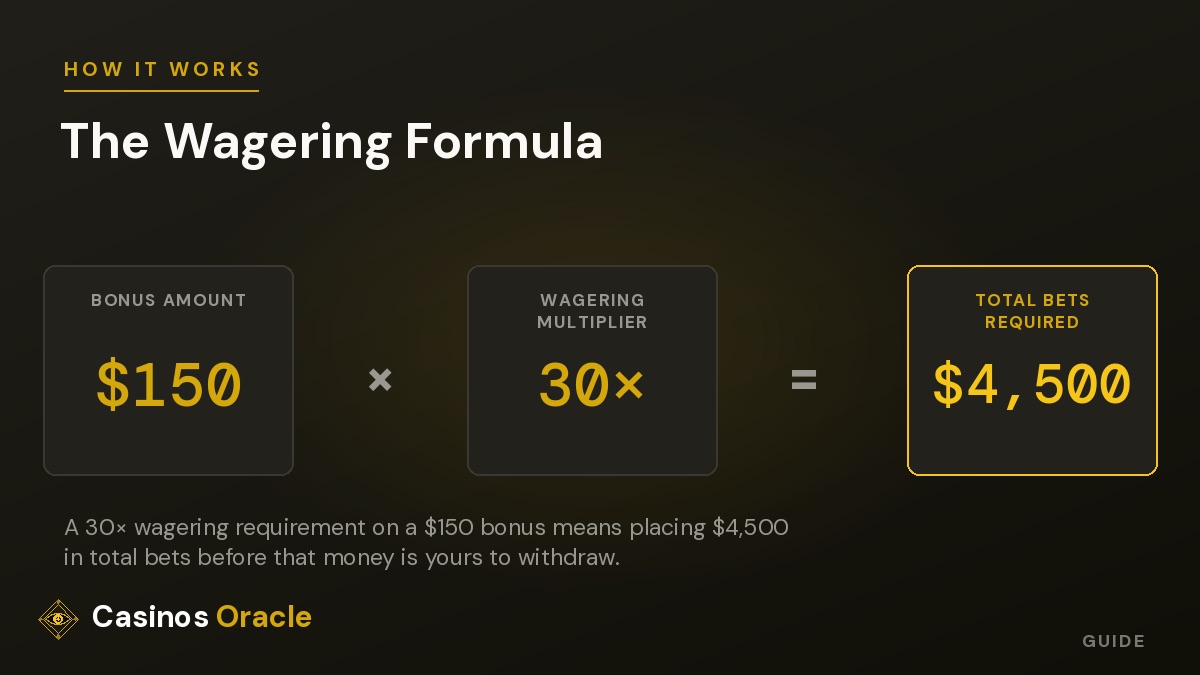
A wagering requirement (also called a playthrough requirement) is the total amount you need to bet before bonus money, or winnings earned from it, can be withdrawn. It’s usually written as a multiplier: “30x wagering” on a $150 bonus means you need to place $4,500 in total bets before that money is yours.
Some operators apply the multiplier to the bonus alone, others apply it to your deposit plus the bonus combined. That second version is a much bigger ask, so check which one you’re looking at before you compare two offers side by side.
Wagering math gets complicated fast once house edge and game contribution enter the picture. If you want the full breakdown, including when a wagering requirement is actually good value, see our guide to wagering requirements.
Game Weighting Decides Which Bets Actually Count
Not every bet counts the same toward a wagering requirement. Game weighting, also called contribution, sets what percentage of each wager applies. Slots commonly contribute close to 100%, meaning every dollar wagered counts as a full dollar toward clearing the bonus.
Table games tell a different story. Blackjack and video poker, both low house-edge games, often contribute 10% or less, sometimes nothing at all. Roulette and baccarat usually land somewhere in between, often 10-25%. Casinos weight games this way for a reason we cover in our guide to house edge and RTP: the lower a game’s edge, the less a casino wants it counting toward your wagering.
The upshot: unless the terms say otherwise, treat most bonuses as slots offers. Contribution rates aren’t fixed either. They can change by promotion, by provider, and sometimes by individual game title, so check the specific bonus rather than assuming last month’s terms still apply.
Eligible and Excluded Games
Beyond weighting, most bonuses publish a list of games you’re allowed to play with bonus funds, or a list of games you’re not. Wagering on an excluded title while a bonus is active can void your winnings entirely, even if the rest of your session followed the rules.
Jackpot slots are a common exclusion, even when the base slot category is otherwise eligible. Feature buys and bonus-buy options can be excluded too, on the same slot that’s fine to play normally. A game can be eligible and one of its features can still not count, so it pays to check the game list, not just the game category.
Maximum Cashout Caps
Some bonuses cap how much you can actually withdraw, regardless of how much you win while clearing the wagering. A cap might read “max withdrawal $100” on a no-deposit bonus, meaning any winnings above that line simply don’t convert to cash.
This clause shows up most often on no-deposit bonuses, since the casino is handing out free money with no purchase behind it and wants to limit its own downside. There’s no single number that applies everywhere, so treat the cap as something to check per offer, not something you can assume.
The Maximum Bet Rule
Most bonuses set a maximum stake per spin or hand while the bonus is active, often somewhere in the $5-10 range. Bet above that limit, even once and even by accident, and a casino can void your winnings on the spot.
The trap catches more players than you’d think. It’s easy to bump your stake after a win, or to switch games without noticing the new one has a higher default bet. Check the max bet figure before you start, and keep an eye on it while your bonus is still active.
Sticky vs Non-Sticky Bonuses
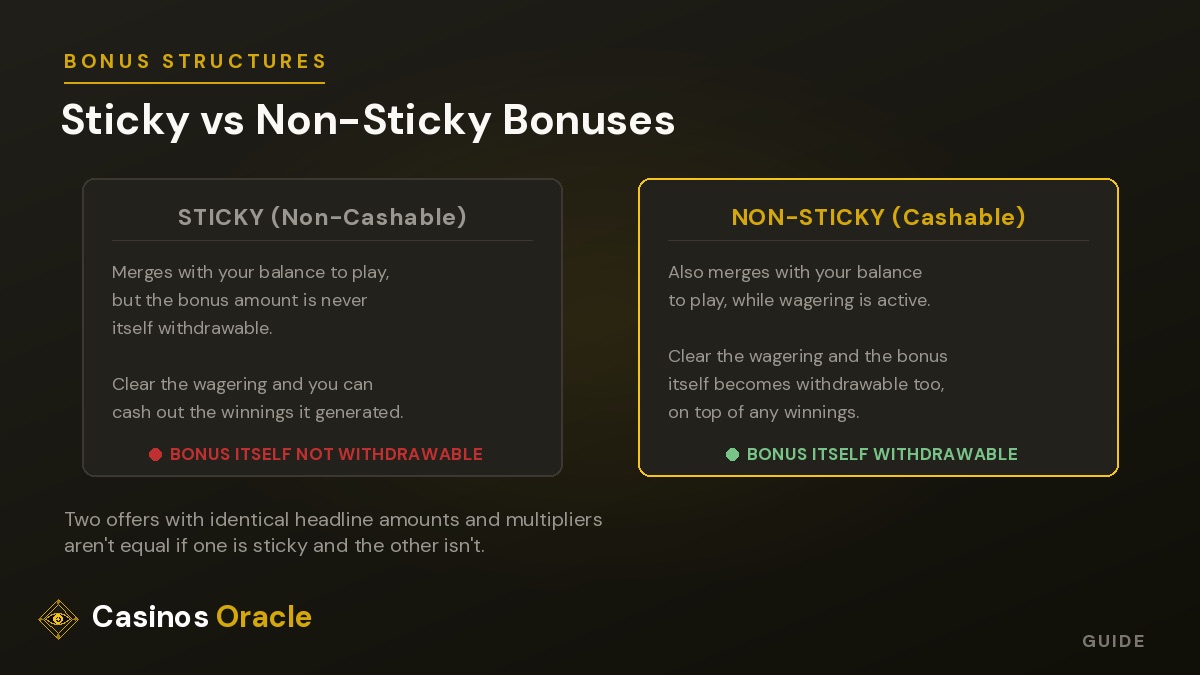
A sticky bonus, sometimes called non-cashable, merges with your balance for play but is never itself withdrawable. Clear the wagering and you can cash out the winnings it generated, but the original bonus amount stays with the casino. A non-sticky bonus works differently: once you clear the wagering, the bonus itself becomes withdrawable too, on top of any winnings.
This distinction applies the same way whether you’re looking at a welcome package, a reload offer, or a no-deposit spin bundle. Two bonuses with identical headline amounts and wagering multipliers aren’t equal offers if one is sticky and the other isn’t, so it’s worth checking which type you’re being offered before comparing the numbers.
Time Limits and Expiry
Bonuses don’t last forever. Most carry a clearance window, commonly somewhere between 7 and 30 days from the moment they’re credited. Miss the deadline and whatever you haven’t wagered, along with any related winnings, gets forfeited.
A short window paired with a high wagering multiplier is the combination to watch for. Thirty times wagering on a $200 bonus is a lot of betting volume to fit into a week, and a tight deadline is often what makes an otherwise reasonable-looking bonus impossible to clear in practice.
Minimum Deposit and Player Eligibility
Deposit bonuses usually specify a minimum qualifying deposit, below which the bonus simply won’t trigger. Eligibility rules go further: most offers are limited to new players, one per person, household, or payment method, and restricted in certain countries or states.
These restrictions are why the headline offer you see advertised isn’t guaranteed to be the one you’re shown when you sign up. Our vetted casino reviews note the terms and player restrictions that actually apply at each operator, rather than the general marketing version.
How to Read a Bonus’s Terms in Under a Minute
You don’t need to read every line of a bonus’s terms and conditions. You need to find six numbers and one list. Before you claim anything, look for:
- The wagering multiplier, and whether it applies to the bonus alone or to deposit plus bonus
- Which games count toward wagering, and at what percentage
- Any excluded games or features, including jackpot slots and bonus buys
- A maximum cashout or withdrawal cap
- A maximum bet limit while the bonus is active
- The expiry window, and whether you can realistically clear the wagering inside it
If a bonus’s terms don’t clearly answer most of these, that’s a red flag on its own. Pair this checklist with sensible bankroll management, and if you’re still choosing where to play, our guide on how to choose a safe online casino covers what else to check beyond the bonus itself.
No-Deposit Bonuses to Compare
- ★ Editor's Top Pick — Best Bonus Offer




Sir Casinos may receive compensation when you click links. Gambling involves risk. 18+ only. Play responsibly.