
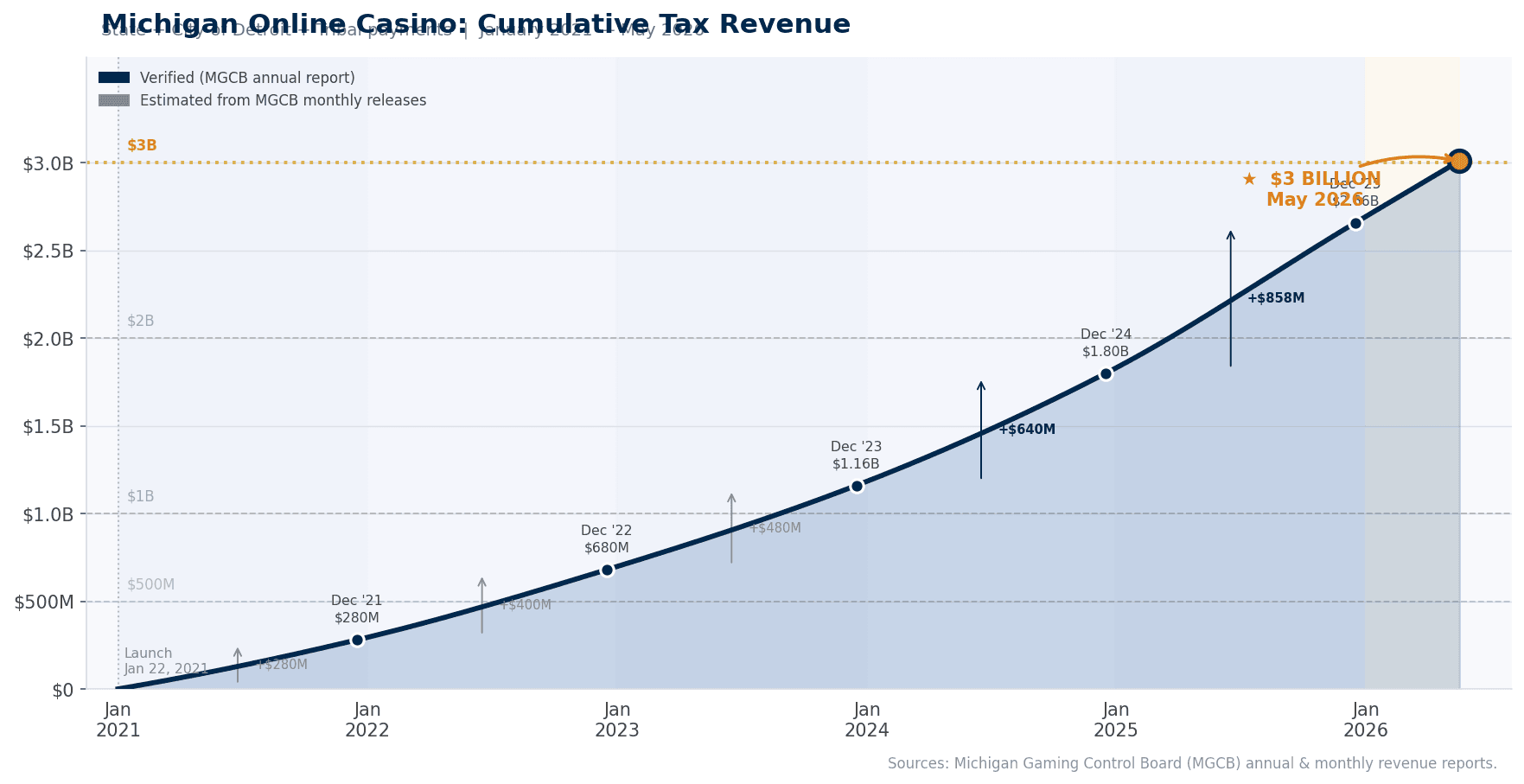
Michigan’s regulated online casino market cleared $3 billion in cumulative tax revenue in May 2026, according to data compiled from Michigan Gaming Control Board (MGCB) filings. The milestone comes less than five years after the state’s iGaming market launched in January 2021, making Michigan one of the fastest regulated markets in US history to reach that threshold.
Where the Money Goes
iGaming tax revenue in Michigan is distributed across several state-designated funds. The largest share flows to the School Aid Fund, which supports K-12 public education across the state. A portion is also directed to the First Responder Presumed Coverage Fund, which provides workers’ compensation benefits to first responders diagnosed with occupational illness. Additional allocations support tribal governments, local authorities hosting licensed operators, and problem-gambling programmes administered by the state.
How Michigan Got Here
Michigan’s iGaming programme went live in January 2021 with an initial group of operators and has expanded to 15 licensed platforms as of mid-2026. Revenue growth has been consistent and accelerating: the state has now posted three consecutive months above $300 million in iGaming revenue, and May’s $64.2 million monthly tax contribution was one of the largest single-month tax figures in the market’s history. The arrival of new operators, including bet365, which completed its first full month in Michigan in May, has brought new marketing investment and promotional activity that appears to be broadening the player base rather than simply redistributing existing spend.
The Broader Context
Michigan’s $3 billion tax milestone is often cited by advocates for iGaming legalisation in other states as evidence of the model’s fiscal value. States like Virginia and Indiana, which saw iGaming bills fail in 2026, are now watching Michigan’s continued growth from the outside. Whether the tax-revenue argument eventually moves enough votes to unlock those markets remains to be seen, but the numbers from Michigan give proponents a compelling case to make.
Sources
- Saturday Tradition: Michigan Online Casino Tax Revenue Surpasses $3 Billion Lifetime In May
- Michigan.gov MGCB: Detroit Casinos, Revenues and Wagering Tax Information
- PlayMichigan: Michigan iGaming & Gambling Revenue, May 2026 Data
- SCCG Management: Michigan Online Casino Revenue Record March 2026 Highlights Strong Growth